
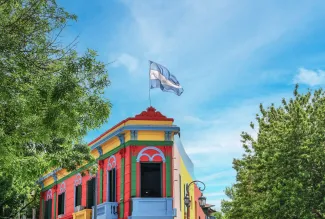
BUENOS AIRES, Argentina — There's a particular kind of traveler who ends up in Argentina and never quite leaves. Not physically, maybe, but emotionally. I've watched backpackers arrive planning a two-week sweep through Buenos Aires and Mendoza, only to still be there six months later, teaching English in Palermo or working remotely from some sun-drenched café in Salta. Argentina does that to you. It gets under your skin with its strange, beautiful contradictions: the European elegance colliding with Latin chaos, the cosmopolitan swagger of its cities softening into the raw, untouched wilderness just hours away. This is a country where you can dance tango at 3 a.m. in a dimly lit milonga, then board a bus south and stand face-to-face with glaciers older than human civilization. Where the wine is world-class and absurdly cheap, where football is religion, and where the people argue about politics with the intensity of philosophers and the passion of poets. Argentina stretches from tropical jungles in the north to the icy edges of the world in Patagonia, and somehow it all feels like one coherent, chaotic love letter to adventure.
Buenos Aires: The City That Refuses to Sleep
If you're arriving by plane, you're landing in Buenos Aires, and honestly, that's not a bad place to get stuck for a while. The city has this worn-in elegance, like a beautiful coat you've owned for years. The architecture is unmistakably European, all Belle Époque facades and wide boulevards that could pass for Paris if you squint. But the energy is pure Latin America: loud, colorful, unapologetically alive. Tango isn't just a dance here; it's a cultural heartbeat. You'll hear it spilling out of doorways in San Telmo, see older couples practicing in plazas at dusk, feel it humming beneath the surface of every late-night conversation. For travelers, Buenos Aires offers that rare combination of accessibility and depth. You can stay in a hostel for pennies, eat empanadas on street corners, and still stumble into world-class art galleries, bookstores the size of theaters, and dinners that stretch past midnight. The city also serves as the ideal launching point for understanding modern Argentina. The independence movement began in 1810 and was formally declared in 1816, followed by years of internal conflict and nation building, according to Travel. Between 1880 and 1930, European immigration and agricultural exports fueled a Golden Age that shaped the cultural landscape still visible today. Later came the rise of Juan Perón and a brutal dictatorship from 1976 to 1983. Democracy returned in 1983, and that history, layered and complex, lives in the city's bones.
Patagonia: Where the World Feels Bigger Than You
Then there's the south. Patagonia is one of those places that recalibrates your sense of scale. It's not just big; it's vast in a way that makes you feel small in the best possible sense. The glaciers here don't just sit pretty for Instagram; they crack and roar, calving chunks of ice the size of buildings into turquoise lakes. The landscapes are raw, windswept, almost hostile, and utterly breathtaking. This is trekking country, the kind of place where you meet other travelers who've been on the road so long they've forgotten what day of the week it is. Hostels in El Calafate and El Chaltén fill with sun-weathered backpackers comparing trail notes, swapping stories about close encounters with guanacos, debating whether to splurge on the ice-trekking tour or save money for another month in South America. Patagonia also offers a psychological shift. After weeks or months bouncing between hostels, buses, and crowds, the solitude here feels almost sacred. It's a place to exhale, to remember why you started traveling in the first place. Whether you're staring up at the jagged peaks of Fitz Roy or watching condors circle overhead, there's something about being this far south that makes everything else feel very far away.
Wine Country, the North, and Everything In Between
Mendoza is where you go when you need a break from intensity. The wine region sprawls at the foot of the Andes, sun-drenched and slow-paced, perfect for renting a bike and pedaling between vineyards. The Malbec is excellent, the steaks are enormous, and the hostels are full of people nursing mild hangovers and debating their next move. Up north, the landscape shifts again. The tropical jungles near Iguazú Falls are thick, humid, and overwhelming in the best way. The falls themselves are less a single waterfall and more a sprawling network of cascades that drench you in mist and leave you grinning like an idiot. Further northwest, Salta and Jujuy offer high-altitude deserts, colorful rock formations, and small towns where time moves differently.
Why Argentina Sticks With You
Argentina isn't an easy country. The economy swings wildly, the politics are messy, and nothing ever quite runs on schedule. But that's part of the appeal. It's a place that rewards flexibility, curiosity, and a willingness to lean into the chaos. You'll eat incredible meals, meet people who challenge your assumptions, and find yourself in situations you'll be telling stories about years later. For solo travelers, digital nomads, or anyone living out of a backpack, Argentina offers something rare: depth without pretension, beauty without the crowds, and endless opportunities to lose yourself and, occasionally, find something unexpected in the process.