
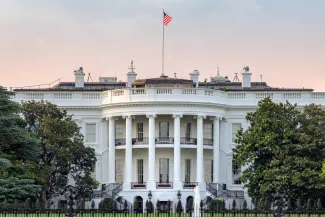
WASHINGTON, D.C., United States — A sudden White House directive to “permanently pause” migration from 19 nations is reverberating through Washington, D.C., and across global travel corridors, leaving would-be visitors, students and families scrambling to understand what the order means for upcoming trips to the United States.
What the new migration freeze covers
The announcement, made by former President Donald Trump in a Truth Social post, effectively revives and extends a travel-ban framework he reintroduced in June. According to the Department of Homeland Security, the nations affected are Afghanistan, Myanmar, Chad, the Republic of the Congo, Equatorial Guinea, Eritrea, Haiti, Iran, Libya, Somalia, Sudan, Yemen, Burundi, Cuba, Laos, Sierra Leone, Togo, Turkmenistan and Venezuela — bringing the total to 19. Travelers from those countries will face an immediate halt on immigrant visas, most non-immigrant visas and refugee admissions. U.S. Citizenship and Immigration Services has also been instructed to conduct “a full-scale, rigorous reexamination of every Green Card for every alien from every country of concern,” agency director Joseph Edlow wrote on X. The order arrives in the wake of a deadly Nov. 26 attack near the White House that left National Guard member Sarah Beckstrom, 20, dead and colleague Andrew Wolfe, 24, seriously injured. Investigators identified the suspect as Rahmanullah Lakanwa, 29, an Afghan national who entered the country in 2021 under Operation Allies Welcome and received asylum this spring.
Key quotes from the announcement
“I will permanently pause migration from all Third World countries to allow the U.S. system to fully recover,” Trump wrote on Truth Social — as Trump told followers on the social platform. In a prepared statement, DHS said the 19 named countries mirror “the proclamation signed in June” that cited national security concerns.
Immediate travel implications
- Visa issuances: Consular sections worldwide received orders to stop processing most applications from citizens of the 19 nations. Routine tourist, student, and business visas are on hold until further notice.
- Green-card reviews: Permanent residents originating from the listed countries may undergo enhanced vetting when renewing documents, reentering the United States or applying for citizenship.
- Airline bookings: Carriers that regularly route passengers from hubs in Doha, Istanbul, Addis Ababa, and Dubai to North American gateways are evaluating refund and re-routing policies.
- Humanitarian parole: NGOs fear that medical, educational and emergency-relocation cases will stall, complicating evacuation pipelines for conflict zones such as Sudan and Yemen.
Ripple effects for U.S. tourism
The United States projected a 9% increase in international arrivals for 2025, according to the World Travel & Tourism Council, yet Oxford Economics recorded an 8.2% decline in the first half of the year. While travelers from the 19 nations make up a small slice of overall leisure arrivals, their absence is poised to hit niche segments:
- VFR travel (visiting friends and relatives) — especially among sizable diaspora communities from Haiti, Somalia, Cuba, Venezuela and Yemen living in Florida, Minnesota, New York, and Michigan.
- Higher education — thousands of students from Iran, Myanmar, Afghanistan and Venezuela hold active F-1 visas; renewals could be blocked, potentially forcing enrollment deferrals or transfers.
- Cultural and sporting events — Haitian soccer supporters hoping to attend 2026 FIFA World Cup matches on U.S. soil may now be sidelined.
- Business travel — energy and mining delegations from Chad, Equatorial Guinea and Turkmenistan regularly attend conferences in Houston and Denver; organizers anticipate costly last-minute speaker cancellations.
Legal and civil-rights pushback
Civil-rights lawyers say the blanket approach could invite constitutional challenges. One X user commented that such a restriction “risk[s] violating equal protection principles” by punishing entire nationalities, though others applauded the crackdown as a security safeguard. Immigration attorneys predict a slate of lawsuits arguing that the government must supply “individualized, rational criteria” rather than broad nationality-based bans.
How airlines, hotels, and travel planners are reacting
U.S. carriers have not suspended any city pairs outright, but several airlines confirmed they are allowing no-fee changes for ticket holders carrying passports from the 19 countries. Hotel groups say cancellations remain isolated but note that length-of-stay bookings tied to university move-in weeks could be affected if students cannot return. Tour operators specializing in diaspora-focused trips — for example, Haitian heritage tours or Iranian New Year packages — are assessing whether to pivot marketing to third-country clients who can still fly.
Tips for Travelers
- Check passport country carefully: Dual citizens traveling on a secondary passport may still be barred if their place of birth is flagged in airline reservation systems.
- Monitor embassy websites: U.S. consulates will post updates on the specific visa classes suspended. Appointments could be canceled with little notice.
- Expect secondary inspection: Green-card holders from the listed nations should budget extra time at U.S. ports of entry and carry proof of U.S. residence and employment.
- Re-route with buffers: Travelers transiting U.S. hubs en route elsewhere may need to reroute through Canada or Europe to avoid denial of boarding.
- Seek legal counsel early: Students or employees whose status expires within six months should consult immigration counsel to explore extension strategies or temporary transfers.
Frequently Asked Questions
Does the freeze affect U.S. citizens visiting the 19 countries?
No. The order restricts inbound travel to the United States. Outbound U.S. travelers remain free to visit these destinations, subject to local entry rules and any State Department travel advisories.
How long is “permanent”?
The directive offers no sunset clause. A future administration or court ruling would be required to rescind or modify the ban.
Are humanitarian exceptions possible?
Case-by-case waivers exist, but advocates say approval rates are historically low and processing times are unpredictable.
What if I already hold a valid U.S. visa?
Airlines will honor existing visas until carriers receive written notice to the contrary. Nevertheless, Customs and Border Protection officers retain authority to deny entry at the port of arrival.
The broader context for travelers
Debate over nationality-based bans has flared at multiple points in recent U.S. administrations. The latest move underscores a larger recalibration of American border policy, which, in turn, shapes airlift, tour programming, and corporate travel budgets. Though the 19 countries comprise a modest share of holidaymakers, the policy sends a chilling signal to millions who transit through the United States for family reunions, conferences, and academic pursuits. For globetrotters plotting itineraries over the next year, the key takeaway from Washington, D.C., is uncertainty: policy shifts can occur overnight, instantly rewriting the entry rulebook. Staying agile — and informed — is the new essential skill in international trip planning.
About the Author

Bob Vidra
Bob Vidra, based in scenic Tahoe, is an esteemed tech editor known for his deep understanding of the dynamic intersection of technology, travel, and the outdoors.