
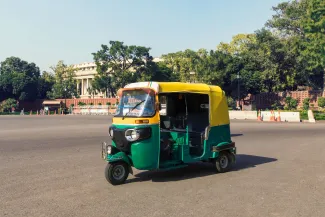
GUWAHATI, India — A simmering battle over taxi permits has erupted into a full-blown border blockade at Jorabat, the gateway between Assam and Meghalaya, stranding tourists, choking traffic, and rattling the region’s all-important visitor economy. The clash, centered just outside Guwahati, highlights long-standing friction over who gets to ferry travelers to the pine-clad hills of Shillong and the tea-scented plains of Assam.
The trigger: Calls for a “reciprocal” taxi policy
Tensions escalated earlier this week when the All Khasi Meghalaya Tourist Taxi Association (AKMTTA) began turning away cabs bearing Assam license plates from entering Shillong and other Meghalaya destinations. The group argues that unchecked entry by out-of-state drivers slices into local income and has demanded a formal Reciprocal Transport Agreement as well as a fresh tourism transport policy from the Meghalaya government. Assam’s unions hit back almost immediately. Drivers affiliated with several Guwahati-based groups blocked Meghalaya cabs from picking up fares at Guwahati Railway Station and Lokpriya Gopinath Bordoloi International Airport. By Thursday, the standoff spilled onto National Highway 6 at Jorabat, causing a miles-long logjam that stranded hundreds of commuters, business travelers, and holidaymakers.
Political flashpoints at the barricades
The blockade took an overtly political turn when protesters halted the SUV of former Meghalaya Education Minister Rakkam A. Sangma. Assam Police eventually cleared a path, but video clips of the incident ricocheted across regional television and social media, deepening public anxiety about safety on the route. Former Meghalaya Tourism Minister Paul Lyngdoh urged quick dialogue, warning that the impasse could “cripple the tourism sector.” “Tourism is the backbone of Meghalaya’s economy,” Lyngdoh said during a news briefing in Shillong, “and prolonged blockades will damage livelihoods on both sides.”
Why travelers should care
The high-season calendar on the Shillong plateau runs from October to March, when clear skies and cool temperatures draw hikers, birders, and festivalgoers. Last season, state data showed close to 1 million tourist arrivals in Meghalaya—many of whom landed in Guwahati before continuing by road. A prolonged taxi feud risks displacing that seasonal influx to other Himalayan or Northeast destinations, undermining hotel bookings, festival ticket sales, and adventure-tour operators. For leisure travelers already en route, chaos is more immediate. Tour buses carrying photography groups to Sohra’s famed living-root bridges were reportedly forced to turn back to Guwahati on Thursday afternoon. Backpackers aiming for Dawki’s crystal-clear Umngot River faced lengthy detours via secondary roads ill-suited to heavy traffic. And inbound flyers arriving on late-evening connections from Delhi or Mumbai found limited ground-transport options beyond costly private transfers.
Inside the Assam–Meghalaya border taxi dispute
- Who is blocking whom? Meghalaya’s AKMTTA is restricting Assam cabs from operating inside its borders, while multiple Assam unions are blocking Meghalaya vehicles at Guwahati transport hubs.
- Main demand: A “Reciprocal Transport Agreement” guaranteeing equal pick-up and drop-off rights in both states.
- Flashpoint location: Jorabat on National Highway 6, roughly 18 kilometers from Guwahati city center.
- Key institutions affected: Guwahati Railway Station, Lokpriya Gopinath Bordoloi International Airport, Shillong’s Police Bazar taxi stand.
- Date tensions peaked: Thursday, Sep. 18, 2025. (The dispute began earlier in the week.)
The tourism sector counts the cost
The Meghalaya Tourism Development Forum (MTDF) issued an advisory cautioning hoteliers and tour operators that cancellations could rise sharply if talks stall. In fiscal 2024, tourism contributed nearly ₹9 billion to the state’s gross domestic product, MTDF data show. A dip in arrivals even for a few weeks would ripple through souvenir markets, homestays, and the emerging ecosystem of music and literary festivals. Assam’s operators are equally nervous. Guwahati serves as the aviation gateway not only for Meghalaya but also for Nagaland, Manipur, and Arunachal Pradesh. A blockade that pushes visitors to fly into alternative airports such as Silchar or Agartala could squeeze Assam’s driver community, airport concessionaires, and city hotels that rely on overnight stays from transit passengers.
Government response—so far limited
Both state governments have acknowledged the crisis but have yet to unveil a concrete roadmap. Meghalaya’s transport secretary said the state is “studying reciprocal frameworks used in other Himalayan regions.” Assam’s transport minister told local press that talks are under way but warned that “public order will be maintained at any cost.” No joint meeting of the two cabinets had been scheduled at press time.
Tips for travelers caught in the Assam–Meghalaya taxi row
- Monitor official advisories: Check Meghalaya Tourism and Assam Transport Department social feeds before setting out.
- Pre-book private transfers: Reputable tour operators based in either state can arrange vehicles with dual-state permits, albeit at a premium.
- Consider alternate entry points: Flights to Shillong’s Umroi Airport remain unaffected, though capacity is limited to turboprop aircraft.
- Use shared inter-state buses: Government-run Assam State Transport Corporation (ASTC) and Meghalaya Transport Corporation (MTC) coaches are crossing the border under police escort.
- Keep buffer time: Road journeys that normally take 2 hours may stretch beyond 5 hours amid diversions.
- Stay flexible with itineraries: Swap crowded hotspots such as Cherrapunji for lesser-known locales like Mawlyngot or the Garo Hills, reachable via interior roads.
What could break the deadlock?
Industry observers say an agreement modeled on Sikkim–West Bengal’s shared-taxi framework could pacify both sides. That arrangement issues rotational permits, caps daily fleet entry, and imposes unified fare charts. However, any solution would need buy-in from more than a dozen unions spread across two linguistically and culturally distinct states. One Assam union leader warned, “We will intensify our protest unless there is parity in operating rights,” he said during a roadside press meet at Jorabat. The hardened rhetoric suggests neither camp will retreat without official guarantees.
Potential scenarios for travelers
| Scenario | Time Frame | Impact on Travel |
|---|---|---|
| Quick bilateral accord | 1–2 weeks | Border traffic normalizes; minor fare hikes likely. |
| Prolonged negotiations | 1–2 months | Continued disruptions; travelers pivot to flights into Umroi or Silchar. |
| Escalation into state-wide strike | Indefinite | Tourism slump across Northeast; package tours rerouted to Sikkim or Bhutan. |
FAQ: Assam–Meghalaya border taxi blockade
Is the airport in Guwahati operating normally?
Yes, flights are on schedule, but ground transport options are limited. Book transfers in advance.
Can I rent a self-drive car to avoid taxis?
Local regulations require additional permits for out-of-state vehicles entering Meghalaya. Check with your rental agency.
Are shared sumo jeeps still running?
Some are, but departures are sporadic. Arrive early and expect long queues.
Does travel insurance cover blockade-related cancellations?
Policies vary; look for “travel delay” or “civil commotion” clauses and keep all receipts.
Bottom line for JetsetterGuide readers
Northeast India’s natural beauty remains undimmed, but getting there—and getting around—requires fresh diligence in the wake of the taxi turf war. Until Assam and Meghalaya hammer out a reciprocal deal, travelers should brace for longer journeys, higher transfer costs, and the possibility of last-minute itinerary tweaks. Keep alternative routes handy, follow local advisories, and, above all, build flexibility into your plans. — as Lyngdoh told reporters in Shillong.