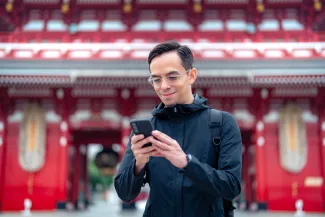
TOKYO, Japan — The Hidden Key to Unlocking Japan's Food Scene
I've spent years navigating Asia's sprawling cities, and I can tell you this with certainty: the difference between touring a place and truly living in it often comes down to something as simple as a phone number. In Japan, that difference is particularly stark. You can admire temples and bullet trains all you want, but the real texture of daily life here reveals itself when you can order ramen to your Airbnb at midnight, navigate subway exits without guesswork, or snag a reservation at a neighborhood izakaya through Tabelog.
A Japanese phone number isn't just convenient. It's the gateway to experiencing Japan the way locals do, particularly when it comes to food.
Why Food Delivery Apps Demand Local Numbers
Japan's food delivery market, known locally as "demae" (ordering out), exploded after COVID-19. What was once dominated by traditional phone-order takeout transformed into a sophisticated app-based ecosystem blanketing urban centers from Tokyo to Osaka to Kyoto. While global platforms like Uber Eats offer English interfaces that make life easier for tourists, the real depth of Japan's delivery scene lives on domestic apps that often require local authentication.
Demae-can, a local favorite with over 35,000 participating restaurants, frequently requires SMS verification during registration, a process that doesn't always accommodate foreign numbers. Menu, boasting access to 90,000-plus establishments, follows similar patterns. These aren't arbitrary barriers. They're built around local payment systems like PayPay and LINE Pay, phone-based authentication protocols, and verification methods designed for Japanese mobile carriers.
The practical impact? Without a Japanese SIM or eSIM, you might find yourself locked out of promotions, unable to complete account setup, or restricted to a narrower selection of restaurants. When you're hungry after a long day exploring Kyoto's temple circuit, that limitation matters.
Beyond Delivery: Navigation and Reservations
The benefits extend well beyond late-night gyoza cravings. Real-time navigation apps function more smoothly with local numbers, offering live tracking and location-based services that sometimes falter with international SIMs. Google Maps works fine for basic directions, but hyperlocal tools that guide you to the correct subway exit (critical in stations like Shinjuku with its 200-plus exits) often perform better with Japanese numbers.
Restaurant reservations present another layer of complexity. Tabelog, Japan's dominant dining review and booking platform, integrates seamlessly with local phone verification. While some high-end establishments accept international bookings through concierge services, neighborhood spots, the kind serving exceptional yakitori or sublime tempura without English menus, often require local contact information. Miss that, and you miss some of the best meals Japan offers.
The Subscription Advantage
For travelers spending more than a few days in Japan, a Japanese number unlocks subscription services that significantly improve quality of life. Uber Eats, covering 24-plus prefectures from Tokyo to Fukuoka, offers a monthly subscription at ¥980 that reduces delivery fees (typically ¥99 to ¥299 per order). Standard delivery fees add up quickly when you're ordering multiple times, especially in sprawling cities where walking to restaurants after a full day of exploration feels like a bridge too far.
That subscription model, along with similar offerings from domestic apps, works best with local payment integration and phone verification. Foreign credit cards sometimes trigger additional authentication steps that complicate checkout. A Japanese number smooths those friction points.
Practical Considerations for Food-Focused Travelers
Getting a Japanese phone number isn't complicated. Major airports offer SIM cards and eSIM options at arrival, with plans ranging from data-only to voice-enabled packages. For food-obsessed travelers planning extended stays or frequent visits, investing in a voice-capable plan opens doors that pure tourism rarely reaches.
This matters most if your travel style revolves around meals, if you're the type who builds itineraries around markets, street vendors, and chef-recommended spots tucked into residential neighborhoods. Japan rewards that kind of engagement, but it requires infrastructure. Apps like Demae-can and Menu don't just deliver food. They deliver access to regional specialties, late-night comfort meals, and the ability to explore cuisine without language barriers complicating every transaction.
The Texture of Everyday Travel
Japan's appeal extends beyond its famous landmarks. The country's true character emerges in small, repeated interactions: figuring out which train platform you need, ordering tonkatsu when you're too exhausted to decipher a menu, discovering a hidden coffee shop through a local app's recommendations. A Japanese phone number doesn't create those moments, but it removes the friction that prevents them from happening naturally.
For expats and long-term travelers, this becomes second nature. You stop thinking about verification codes and start focusing on whether you want miso or shoyu broth. That shift, from logistical problem-solving to genuine immersion, defines the difference between visiting a place and understanding it.
If you're planning serious time in Japan, particularly if food drives your travel decisions, treat a local phone number as essential infrastructure. It's not the only tool you need, but it's the one that makes everything else work better.