
KOLKATA, India — Long dominated by postcard beaches and luxury palaces, India’s travel wish list is being rapidly rewritten by its own cultural calendar. A fresh data dive from airfare search platform Skyscanner finds that 82% of India-based users are plotting at least one 2025 getaway specifically to witness a festival, heritage site or living tradition. That swing toward immersive experiences is most pronounced in millennial travelers at 84%, with Gen Z close behind at 80%.
Festivals now top the Indian travel calendar
Skyscanner’s “Cultural Tourism Report,” highlighted last week by Times Now, singles out three marquee events generating the lion’s share of search traffic:
- Durga Puja, Kolkata — 53% intent
- Lathmar Holi, Barsana — 51% intent
- Onam, Kerala — 35% intent
Those figures refer to the percentage of surveyed respondents who said they hope to attend each festival next year. “Deciding a destination is not just about beaches and luxury stays,” Times Now wrote in its summary of the report.
Spiritual cities surge in search results
The appetite for culture is not limited to festival weeks. Varanasi—considered one of the world’s oldest continuously inhabited cities and the spiritual heart of Hinduism—has logged a 76% increase in Skyscanner searches for 2025 travel dates. The company attributes the spike to growing curiosity about sunrise aarti ceremonies on the Ganges River and evening lamp-lighting rituals at Dashashwamedh Ghat.
Why cultural tourism in India is booming
Several converging factors appear to be reshaping how Indians allocate their leisure budgets:
- Quest for authenticity. Younger travelers, in particular, report fatigue with “seen-it-on-Instagram” itineraries and want experiences that plug them into local communities.
- Shorter breaks, richer moments. Separate industry surveys cited by Times Now reveal that more than 45% of Indian travelers prefer multiple micro-vacations over a single long holiday, making festival weekends a perfect fit.
- Economic redistribution. Cultural tourism channels spending toward artisans, musicians and small eateries that cater directly to event crowds.
- Sustainability momentum. Festivals anchored in centuries-old traditions encourage preservation of crafts, rituals and heritage architecture.
Spotlight on three must-see festivals
Durga Puja, Kolkata
Taking place each autumn, Durga Puja transforms Kolkata into an open-air art gallery, with elaborate clay idols installed across thousands of neighborhood pandals. The week-long celebration culminates in a river immersion of the goddess Durga and sees live music, dance dramas and nonstop street food. Skyscanner notes that searches for Kolkata peak roughly six weeks before the festival, making early hotel bookings essential.
Lathmar Holi, Barsana
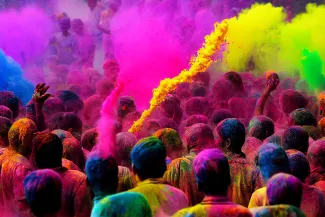
Far from the mainstream paint-throwing parties of Mathura, Barsana’s Lathmar Holi re-enacts a legendary episode from Hindu mythology in which village women playfully “beat” visiting men with sticks. The event’s rustic authenticity—complete with folk songs and free-flowing thandai—has propelled Barsana onto the radar of half the survey’s respondents.
Onam, Kerala
Kerala’s harvest festival stretches over 10 days of boat races, floral carpets and a grand vegetarian feast known as Onasadya. The state tourism board has leveraged the holiday’s inclusive spirit to market backwater cruises and homestay programs, positioning Onam as both a cultural and culinary pilgrimage.
Tips for travelers chasing festivals
- Book transport early. Discount fares on major domestic routes often disappear three to four months before marquee festivals.
- Consider homestays. Village or neighborhood stays can open doors to private rituals and family kitchens rarely seen by outsiders.
- Pack culturally appropriate attire. Many temple precincts require covered shoulders and legs; check local guidelines.
- Budget for donation fees. Entry to pandals, ghats or boat races may be free, but modest donations support community organizers.
- Stay mindful of crowd size. For Durga Puja alone, Kolkata Police estimates daily footfall in the millions; plan off-peak visits to marquee pandals at dawn.
Economic ripple effects across India’s small towns
Skyscanner’s report emphasizes that cultural tourism disperses visitor spending beyond India’s traditional resort corridors. When travelers venture to Barsana for Holi or to backwater villages during Onam, local economies see immediate gains in guesthouse occupancy, handicraft sales and even farm-to-table dining. The Asian Development Bank has cited similar patterns in other emerging markets, finding that festival tourism can uplift per-capita income in rural districts by as much as 12% over a five-year horizon. (That figure comes from a separate 2023 ADB working paper; it was not part of the Skyscanner dataset.)
Balancing exposure and preservation
Heritage advocates caution that unchecked visitor numbers can strain infrastructure and dilute rituals. “We need capacity caps for fragile river ghats and heritage streets,” conservation architect Anupam Mitra said at the 2024 Kolkata International Tourism Conference. Several Indian states are now experimenting with timed-entry passes and digital queue systems to protect delicate sites while still welcoming festival crowds.
FAQ: Cultural tourism in India
- What is the best way to reach Varanasi for sunrise rituals?
- Direct flights connect Delhi, Mumbai, Bengaluru and Kolkata to Lal Bahadur Shastri Airport. Taxis or prepaid auto-rickshaws take roughly 45 minutes to the ghats.
- Is travel insurance necessary for festival trips?
- Yes. Many festivals involve large crowds, and policies covering medical treatment and trip interruption are strongly advised.
- How far in advance should accommodations be booked?
- For high-demand events like Durga Puja, secure rooms at least four months out. Smaller festivals may allow a six-week window.
- Are festival experiences suitable for families?
- Most are, but check local customs. Lathmar Holi, for example, can be raucous and may not suit very young children.
Looking ahead to 2025
With more than four in five Indian travelers eying cultural immersion over sun-lounger relaxation, the country’s tourism map is poised for a dramatic redraw. Marketing analysts predict that airlines and hotel brands will respond with festival-focused fare bundles and curated excursion add-ons. For visitors—whether domestic or international—the shift promises deeper connections to India’s centuries-old traditions, a wider spread of tourist dollars and a travel story that extends well beyond the beach.
— as Times Now reported.
About the Author

Dana Lockwood
Dana Lockwood is a rising journalist who specializes in budget-friendly solo travel.