
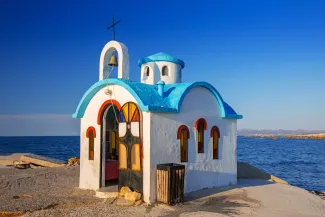
Why Greece Now Rivals the World’s Classic Pilgrimage Hubs
Interest in devotional journeys has existed at least since 800 BC, when supplicants trekked to the Oracle of Delphi. While Rome, Jerusalem and Mecca remain headline destinations, Greek tour operators say their homeland’s blend of rugged landscapes and living monastic communities is drawing fresh attention. Evangelos Papakostantinou of Papakostantinou Travel sees several forces converging. “People are increasingly seeking authentic and meaningful experiences that go beyond conventional tourism,” Papakostantinou said during an industry briefing in Thessaloniki. That demand intensified after recent economic crises and the pandemic, when travelers began craving trips that promise emotional renewal as well as Instagram moments.Ancient Sites Meet Modern Infrastructure
• Better highways and new regional airports have cut travel times to remote spiritual landmarks.• High-speed ferries link island shrines such as Patmos—where John penned the Book of Revelation—to Piraeus and the Cyclades.
• A growing inventory of boutique guesthouses now stands near centuries-old monasteries, offering Wi-Fi alongside iconography workshops.
Key Sacred Stops for Travelers
- Mount Athos: The male-only peninsula houses twenty Eastern Orthodox monasteries, accessible by permit and ferry from Ouranoupoli.
- Meteora: Cliff-top sanctuaries in central Greece that pair spiritual serenity with world-class hiking routes.
- Monastery of Stomio, Konitsa: A two-hour hike rewards hikers with alpine vistas; the monastery marks its feast on Sept. 8.
- Island pilgrimage circuit: Patmos, Tinos, Paros and Corfu each combine beach downtime with venerable churches or icons.
- Panagia Prousiotissa, Karpenisi: Travelers trace an icon legend linking Central Greece to ancient Bursa.
Who Is Booking Spiritual Greece?
Decades ago, pilgrimage buses were dominated by women aged 50–75, who still represent roughly 60–65 percent of the domestic market. Today, however, families, Gen-Z solo backpackers and specialty photography groups all show up on monastery guest lists. Mystakidis Tours reports a noticeable uptick in Orthodox visitors from Romania, Russia, Serbia, the United States and Cyprus. “The balance has become more even, with both men and women participating,” Papakostantinou said at the same briefing, noting that younger travelers often sandwich a liturgy between wine tastings or waterfall treks.Customized Itineraries by Age and Interest
- Elder pilgrims: Slower schedules, wheelchair-friendly coaches and hotels within walking distance of churches.
- Younger explorers: Combo packages that weave in museum nights, cooking lessons and local music festivals.
- International groups: Interpreters, historical primers on Orthodoxy and optional services in native languages.
Media Moments That Move the Masses
A recent Greek television series about a 20th-century saint prompted a crush of visitors to the Saint Paisios Monastery outside Thessaloniki, proving how pop culture can reroute pilgrimage flows overnight. Tour operators now track film releases and viral social-media posts almost as closely as they monitor airline seat capacity.Faith Tourism’s Wider Impact on Greece
Expanding the pilgrimage portfolio could extend the tourism season well beyond Greece’s beach-centric summer. Remote villages benefit from year-round bed nights, restaurants gain a steady stream of off-peak diners, and monastery restoration projects attract fresh donations. Operators also argue that inter-Orthodox travel fosters cultural diplomacy at a time of geopolitical tension.Tips for Travelers
- Pack conservative attire; monasteries often require covered shoulders and knees.
- Secure permits for Mount Athos at least six weeks in advance.
- Schedule feast-day visits early—especially Sept. 8 at Stomio—because beds sell out fast.
- Bring cash for monastery shops; many do not accept cards.
- Consider shoulder months (March–May, October–November) for mild weather and thinner crowds.