
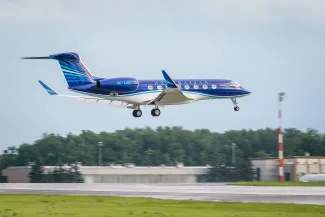
Moscow Closes AZAL Crash Investigation
MOSCOW, Russia — Russia's Investigative Committee has officially closed its investigation into the Azerbaijan Airlines crash that killed 38 people in December 2024, a move that raises immediate questions about the depth and transparency of the inquiry into an incident that occurred after the aircraft sustained damage while flying through Russian airspace. The announcement came through Azerbaijan's Foreign Minister Jeyhun Bayramov, who confirmed that Russian authorities had concluded their investigation into the crash, which took place on Kazakh territory after the AZAL flight was damaged over Russia, according to Airlines. The closure of this investigation matters for several reasons, none of them academic. When aircraft are damaged in one nation's airspace and crash in another's territory, the investigative responsibilities become complex, politically sensitive, and often contentious. The speed with which Moscow has wrapped this case, combined with the geopolitical context of Russian airspace and regional tensions, will not inspire confidence among aviation safety professionals or the families of the 38 victims.The Human Toll and Regional Impact
The crash killed 38 people and left 29 survivors hospitalized, according to Airlines. Among the injured were three citizens of Kyrgyzstan, underscoring the multinational nature of the tragedy and the ripple effect across Central Asia and the South Caucasus. For travelers and aviation professionals tracking this incident, the question is not whether investigations close, it's whether they close with answers. Aviation accidents involving international carriers, foreign airspace, and cross-border crash sites demand multilayered coordination between civil aviation authorities, investigative bodies, and international oversight mechanisms. The brevity of this inquiry, at least as publicly reported, will fuel speculation about what was investigated, what was withheld, and whether accountability extends beyond paperwork.Insurance Payout Signals Formal Closure
Russia has paid an insurance compensation of 1.003 billion rubles for the damaged aircraft, according to a statement by Russian President Vladimir Putin, as reported by Airlines. The payout signals formal closure from a financial and administrative standpoint, but it does not address the investigative questions that remain unanswered or under-examined by independent observers. Insurance settlements in aviation incidents are standard procedure. What is less standard is closing an investigation involving foreign nationals, foreign carriers, and damage sustained in contested or militarily active airspace without clear publication of findings or international verification. For travelers flying routes that cross Russian airspace, particularly those connecting Europe, Central Asia, and the Middle East, this incident and its opaque conclusion underscore persistent risks in regions where military activity, air defense systems, and civil aviation corridors overlap.What This Means for Regional Aviation
Azerbaijan Airlines operates a critical network connecting the South Caucasus with Central Asia, the Middle East, and Europe. The airline's routes frequently transit or skirt Russian airspace, particularly on flights to and from Kazakhstan, Kyrgyzstan, and other former Soviet republics. For business travelers, journalists, and expedition planners working in this region, the safety and transparency of airspace management is not a theoretical concern. The closure of this investigation without clear international collaboration or public findings adds another layer of opacity to flying routes that already carry elevated risk profiles. Travelers should be asking their carriers and booking platforms direct questions about routing, airspace avoidance protocols, and whether alternative flight paths exist that bypass contested or militarily active zones.Geopolitical Context Cannot Be Ignored
This crash occurred in December 2024, a period when Russian air defense systems were on heightened alert due to ongoing military operations and regional tensions. While the specific cause of the damage sustained by the AZAL aircraft has not been publicly detailed in the investigation's closure, the timing and location raise unavoidable questions about whether the aircraft was struck by air defense fire, suffered mechanical failure exacerbated by external factors, or encountered other hazards within Russian airspace. The lack of transparency in the investigation's conclusion will not satisfy international aviation authorities, and it should not satisfy travelers either. When nations close investigations quickly and without clear international oversight, it often signals political expediency over safety accountability.Traveler Takeaways
For those booking flights through Central Asia, the South Caucasus, or any route transiting Russian airspace, this incident is a reminder that geopolitical risk is not abstract. It affects routing, safety protocols, and the transparency with which accidents are investigated and explained. Travelers should monitor advisories from their home governments, check whether their carriers have adjusted routing to avoid contested airspace, and consider the risk profile of airlines operating in regions where military and civil aviation infrastructure overlap. This is not alarmism; it is informed decision-making in an environment where the rules are not always clear and the consequences are permanent. The closure of Russia's investigation into the AZAL crash does not close the chapter on what happened in the skies over Russia in December 2024. It simply moves the questions elsewhere.About the Author

Jeff Colhoun
Jeff Colhoun is an acclaimed travel writer, photographer, and filmmaker, whose work is respected both in the United States and internationally.