
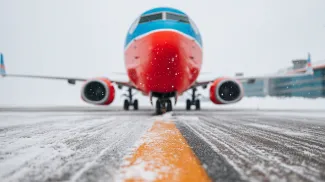
DECATUR, Illinois — A fast-moving storm system tore through the eastern two-thirds of the United States over the weekend, leaving 64 million people under winter weather alerts and triggering a cascade of travel disruptions that grounded flights, delayed connections, and exposed the fragility of air travel infrastructure during peak holiday movement.
The system, which brought a volatile mix of severe weather, spawned multiple tornadoes in central Illinois on Sunday. Preliminary reports from the National Weather Service confirmed that eight homes and a garage were destroyed in Macon County, with two additional homes sustaining significant structural damage. NBC affiliate WAND of Decatur reported that the roof of a home in the county was torn off. No injuries were reported, a rare outcome in tornado events of this scale.
Air Travel Ground to a Halt Across Major Hubs
By midday Sunday, more than 6,000 flights into or out of the United States had been delayed, with over 500 cancellations adding to the chaos. The disruptions came as holiday travelers attempted to return home after Christmas, compounding frustration across already strained airport operations. Boston Logan International Airport emerged as a flashpoint for delays. Federal Aviation Administration alerts warned passengers to expect an average delay of 3 hours and 9 minutes, a crushing setback for anyone attempting tight connections or same-day business travel. The delays rippled outward, affecting downstream flights and creating bottlenecks that persisted well into Sunday evening. The scale of the disruption underscores a persistent vulnerability in U.S. air travel: the system's lack of resilience when weather events collide with high-volume travel periods. Passengers seated in departure lounges or stuck on tarmacs had little recourse beyond rebooking apps and fraying patience.Winter Weather Alerts Span Two-Thirds of the Country
The storm system responsible for the travel chaos placed 64 million people under winter weather alerts, a footprint that stretched across the Midwest, the Great Lakes, the Ohio Valley, and portions of the Northeast. Federal forecasters noted the system's unusual ability to generate both severe convective weather in warmer air masses and winter precipitation in colder zones. This dual threat makes travel planning particularly difficult. Travelers departing from regions experiencing tornadoes may face entirely different conditions at their destination, where snow, ice, or freezing rain could be falling. The unpredictability creates cascading challenges for ground transportation, rental car availability, and last-mile logistics. For those traveling through affected regions, the storm serves as a reminder that winter weather in the United States is not confined to northern latitudes or mountain passes. Severe storms can erupt in the middle of farmland, disrupting highways, knocking out power, and rendering entire corridors temporarily impassable.Tornadoes in Illinois Highlight Regional Volatility
The tornado outbreak in Macon County, Illinois, was particularly striking given the time of year. While tornadoes are less common in late December, they are not unheard of when warm, unstable air collides with a strong cold front. The damage patterns observed in Macon County, complete destruction of multiple structures and significant structural compromise to others, suggest EF-1 or EF-2 intensity, though official ratings had not been released at the time of reporting. The absence of injuries speaks to either luck, effective warnings, or both. Tornadoes that strike rural areas often cause extensive property damage without the casualty counts seen in more densely populated regions. Still, the psychological and financial toll on affected families is significant, particularly during a time of year when resources are already stretched. For travelers passing through central Illinois or connecting through Chicago, the storm's impacts extended beyond the immediate tornado zone. Ground stops, airspace restrictions, and precautionary measures taken by airlines can delay flights even in areas where weather conditions are visually clear.What This Means for Travelers
If you are planning to travel through the Midwest, Great Lakes, or Northeast in the coming days, expect continued disruptions. Storm systems of this scale do not clear cleanly. Residual delays, crew shortages from displacement, and aircraft out of position will continue to affect schedules even after the weather improves. Monitor FAA delay alerts in real time. Boston Logan is not the only airport experiencing extended ground delays; similar conditions are likely at Chicago O'Hare, Detroit Metro, and Cleveland Hopkins as the system moves east. If your connection window is less than two hours, consider rebooking proactively. For those on the ground, road conditions in affected zones remain hazardous. Ice, snow, and debris from tornado damage create unpredictable driving environments. Rental car companies are already reporting shortages in key markets as stranded travelers extend bookings or seek alternate ground transportation.A Reminder of Infrastructure Limits
The weekend's disruptions offer a blunt reminder that U.S. travel infrastructure, particularly aviation, operates with minimal slack. High passenger volumes, tight turnaround schedules, and aging systems leave little room for error when weather intervenes at scale. Travelers returning from holiday trips faced a perfect storm of conditions: peak demand, reduced staffing due to holiday scheduling, and a weather system capable of generating multiple hazard types across a vast geographic area. The result was predictable: delays measured in hours, cancellations that cascaded into the following days, and frustrated passengers with limited options. For expedition travelers, business road warriors, and anyone operating in developing or remote regions, the lesson is clear: build buffer time into connections, carry contingency plans, and recognize that even the most advanced travel systems remain vulnerable to forces beyond human control. The storm will pass. The delays will clear. But the next system is always forming somewhere over the horizon.About the Author

Jeff Colhoun
Jeff Colhoun is an acclaimed travel writer, photographer, and filmmaker, whose work is respected both in the United States and internationally.