
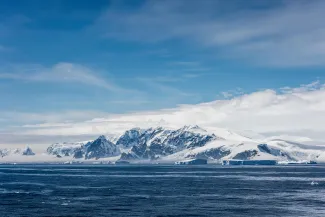
ANTARCTICA — The seventh continent remains the only landmass on Earth without regular airline service, and the reasons have little to do with technological limits and everything to do with operational realities. Qantas runs occasional sightseeing flights that overfly the Antarctic edge, but they don't touch down. No carrier operates scheduled passenger itineraries with landings on the ice. The explanation is straightforward: Antarctica offers a combination of brutal environmental conditions, complex regulatory frameworks, and virtually no commercial demand. There is no population to serve, no economic activity that requires regular air links, and the logistical complications pile up faster than you can clear a runway of snow.
No Infrastructure, No Traffic
The continent's outposts consist of scientific research stations, temporary expedition camps, and specialized tourism facilities that exist for a few months each year. There are no cities, no permanent civilian populations, and no reason for a commercial carrier to justify year-round service. The passengers who do travel to Antarctica arrive via expedition ships, chartered flights tied to research operations, or rare specialty flights linked to high-end tourism operators. When airlines do land on the ice, it makes headlines. Hi Fly landed an Airbus A330-300 at Wolf's Fang Runway on December 1, 2025, according to Airlines. The flight was operated for White Desert and marked the first time an Airbus A330 had ever landed on the continent, according to the same report. Hi Fly also performed an A340-300 service flight to Wolf's Fang Runway on November 2 of this year, inaugurating the year's travel season, according to Airlines. Norse Atlantic Airways flew a Boeing 787-9 Dreamliner, named "Everglades," for the second time in succession to the same airfield, according to Airlines. These are not the beginnings of scheduled service. They are one-off charters tied to specialized expedition tourism operations, often priced in the tens of thousands of dollars per passenger. The flights exist because a specific operator needed to move a specific group of clients to a specific location at a specific time. There is no ticket counter, no route map, and no SkyMiles earning potential.
Operational Complexity at the Edge of the World
Flying to Antarctica is not a matter of filing a flight plan and pointing south. The environment imposes constraints that make even the most remote airstrips look easy by comparison. Runways are carved from ice or compacted snow, and their usability depends entirely on current temperature, wind conditions, and seasonal stability. Weather can shift violently within hours, closing a landing window before an aircraft has a chance to turn around. Diversion options do not exist in any practical sense; the nearest alternate airports are thousands of miles away across open ocean. Fuel logistics compound the problem. There are no fuel farms, no ground handling infrastructure, and no maintenance facilities. Any flight to Antarctica must carry enough fuel for the round trip or coordinate pre-positioned supplies delivered by earlier missions. That limits payload, increases operating costs, and narrows the margin for error. Aircraft must be specially prepared for extreme cold, and crews require training specific to polar operations.
Regulatory and Environmental Constraints
The Antarctic Treaty System governs activity on the continent, and commercial aviation falls under strict environmental and safety oversight. Operators must demonstrate that their activities will not harm the fragile ecosystem, that they have adequate emergency response capabilities, and that they comply with waste management and environmental impact protocols. These are not quick approvals. The regulatory burden alone discourages casual commercial interest. Add to that the lack of air traffic control infrastructure, limited communication systems, and the reality that search and rescue capabilities in Antarctica are rudimentary at best. If something goes wrong, help is far away and response times are measured in days, not hours.
Demand Does Not Justify the Risk
Even if all the logistical and regulatory challenges were solved, the commercial case for regular Antarctic flights does not exist. The Antarctic tourism market is small, seasonal, and dominated by expedition cruises that offer multi-day experiences rather than fly-in, fly-out itineraries. The clients willing to pay premium prices for Antarctic access are often looking for the journey itself, not just the destination. A two-week voyage through the Drake Passage is part of the appeal. The handful of fly-cruise hybrid itineraries that do exist rely on chartered flights that operate only during the austral summer, when conditions allow. These are not regularly scheduled services; they are logistical components of broader expedition packages. The operators who run them accept the high costs because their clients are paying accordingly, but those economics do not scale to support year-round, publicly bookable airline service.
What It Means for Travelers
If you want to reach Antarctica, you have three realistic options: book passage on an expedition cruise, secure a spot on a specialized fly-cruise program, or join a research or government mission. Commercial aviation as most travelers understand it does not apply here. There are no economy fares, no frequent flyer redemptions, and no last-minute deals. The continent remains one of the last places on Earth where access is earned through planning, expense, and acceptance of logistical complexity. That will not change unless demand surges, infrastructure expands, and the regulatory environment shifts to support commercial operations. None of those conditions appear likely in the near term. For now, Antarctica stays off the route maps, and the airlines that do venture south do so as exceptions, not as scheduled service providers. The ice remains distant, difficult, and deliberate.
About the Author

Jeff Colhoun
Jeff Colhoun is an acclaimed travel writer, photographer, and filmmaker, whose work is respected both in the United States and internationally.