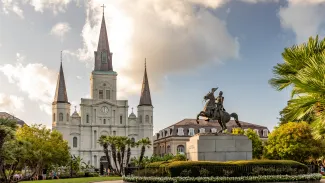
New Orleans Transit Leader Connects Ground Transport to Regional Tourism Growth
NEW ORLEANS, United States — In a city defined by cultural festivals, convention trade, and hospitality revenue, the question of how visitors actually move from airport to hotel, or from hotel to French Quarter, has quietly become a defining piece of infrastructure. On December 11, 2025, Milton Walker Jr., owner of Alert Transportation, underscored the direct economic link between reliable local transit and Greater New Orleans' expanding tourism, event calendar, and commercial activity.
"With thousands of visitors entering the region each week, the ability to move people efficiently affects everything," said Milton Walker Jr., owner of Alert Transportation, according to Travel EINPresswire. His remarks frame transportation not as a supplementary service but as foundational infrastructure, directly influencing restaurant patronage, hotel occupancy, and conference logistics across the region.
Tourism Economy Built on First Impressions and Ease of Movement
Greater New Orleans' visitor economy relies on seamless arrival experiences. Most travelers arrive unfamiliar with neighborhood geography, traffic patterns, and optimal routing between the airport, Central Business District, and cultural corridors such as the French Quarter. Professional ground transport bridges that gap, providing orientation, reliability, and safe passage while freeing guests to focus on dining, museum visits, and nightlife rather than navigation stress.
For urban travelers accustomed to apps, rideshares, and transit legibility, New Orleans poses unique complexity. The city's event-driven calendar, from Jazz Fest to Mardi Gras and Essence Festival, compresses demand and strains informal transport options during peak periods. Professional operators with fleet depth, local knowledge, and group coordination become indispensable, particularly for corporate events, hospitality partners, and international visitors expecting curated service.
How Ground Transport Performance Impacts Core Tourism Metrics
Walker's emphasis on efficiency reflects a broader truth about city-scale hospitality: guest satisfaction begins the moment travelers land. Reliable, punctual transport directly correlates with positive reviews, repeat bookings, and referrals. When transit fails, delayed hotel check-ins, missed reservations, and logistical frustration cascade through the visitor experience, damaging the destination's brand equity.
Beyond individual guests, transport reliability enables commercial activity. Trade shows, conferences, and corporate meetings depend on vendors, exhibitors, and delegates arriving on schedule. Restaurants and entertainment districts benefit when transport operators can handle high-volume evening pickups and late-night returns. Hotels partner with transportation providers to deliver white-glove service that justifies premium rates and positions New Orleans as a global-caliber destination.
According to Travel EINPresswire, Walker stresses that moving people efficiently directly influences restaurant activity and hotel occupancy rates, tying ground transport performance to core tourism metrics. That connection underscores transport's role not as auxiliary logistics but as revenue-enabling infrastructure.
Regional Expansion and the Demand for Coordinated Transit Networks
Greater New Orleans' growth extends into surrounding parishes, dispersing economic activity across a wider geography. Regional expansion creates new challenges: hotels, convention centers, and cultural attractions no longer cluster within a compact urban core. Visitors attending an event in Kenner, exploring the Garden District, or dining in Mid-City require coordinated transport that understands multiple jurisdictions, parking constraints, and event timing.
For event organizers, reliable transit becomes a competitive advantage. Festivals and conferences in New Orleans compete with other U.S. cities for bookings; seamless transport reflects organizational competence and destination sophistication. When transport fails, event reputation suffers, and future bookings migrate to cities with better infrastructure.
Commerce, Employees, and Business Operations
Walker's remarks also highlight transport's importance beyond tourism. Local commerce relies on employee commuting, vendor logistics, client meetings, and trade show participation. Businesses in hospitality, retail, and services depend on predictable, affordable transport to connect workers with jobs, particularly in a city where neighborhoods and employment centers can be fragmented by geography and transit gaps.
According to Travel EINPresswire, dependable transportation helps strengthen New Orleans' global reputation as a hospitable, world-class destination by ensuring safe, efficient movement for residents and visitors alike. That dual function positions transit as both a visitor amenity and a civic good, supporting workforce mobility and commercial vitality.
Building Infrastructure That Matches Ambition
Greater New Orleans' aspirations as a cultural and economic destination require infrastructure that matches scale. Walker's focus on transport reliability reflects a broader recognition that cities competing for convention trade, international tourism, and corporate events must deliver seamless, professional logistics. In a market where travelers compare New Orleans to Miami, Austin, and Nashville, transport quality shapes competitiveness.
For travelers, the takeaway is practical: cities investing in dependable ground transport signal destination maturity and visitor prioritization. When booking New Orleans trips, research transport options in advance, particularly during festival windows. Professional operators with local expertise, fleet reliability, and group coordination offer value that rideshare apps cannot replicate during high-demand periods.
Strategic Implications for Urban Travel
Walker's comments arrive as New Orleans continues to cement its status as a year-round destination, not merely a Mardi Gras or Jazz Fest city. Sustainable tourism growth requires infrastructure that can absorb weekly visitor influxes, support diverse commercial activity, and maintain service quality during peak demand.
For urban travelers chasing culture, cuisine, and festival energy, New Orleans remains unmatched. But accessing that richness depends on logistics that work, routes that connect, and transport systems that treat mobility as mission-critical. Walker's emphasis on reliability reflects a truth applicable across global cities: great destinations are built on movement, and movement requires infrastructure that delivers.