
Rome's Ancient Pilgrimage Routes Get Modern Marketing Push
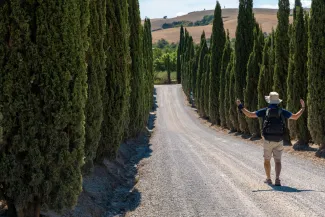
Italy is betting big on slow tourism. The European Association of the Vie Francigene (AEVF), with backing from the Ministry of Tourism, has launched 'La rete dei cammini verso Roma' (The Network of Paths to Rome), a year-long campaign designed to shine a spotlight on Italy's historic pilgrimage trails. Running from December 2025 through December 2026, the initiative promises to deliver a layered narrative about Italy's walking routes through editorial storytelling, regional activities, and a new podcast dedicated to slow travel, according to Ansa. For urban travelers tired of the Colosseum crowd crush, this could be the gateway to a different kind of Italian experience. One that trades Aperol Spritz selfies for ancient footpaths, medieval villages, and the kind of cultural immersion that only comes at walking speed.
What the Campaign Actually Delivers
The project kicks off with original articles published on Italia.it, the country's official tourism portal, focusing on the key themes that will define the campaign over the next twelve months. Think less generic "top 10 hiking trails" content and more substantial journalism about the history, culture, and logistics of Italy's pilgrimage network. But the real action happens between spring and autumn 2026, when four blogger tours will traverse some of Italy's most significant walking routes. These aren't influencer junkets; they're designed to generate authentic ground-level content from travelers actually experiencing the routes, capturing the sweat, scenery, and unexpected discoveries that come with multi-day trekking through Italian countryside. The campaign also includes a podcast series, a smart move in an era when travel planning increasingly happens during commutes and gym sessions. Dedicated to slow tourism, it's positioned to reach audiences who might not actively search for pilgrimage content but are hungry for deeper, more meaningful travel experiences.
Why This Matters for City Breakers
Rome has always been the anchor for Italy's pilgrimage routes, and this campaign reinforces the capital's role as the convergence point for centuries-old trails. But the strategic focus here extends well beyond Rome proper. These walking routes thread through lesser-known regions, smaller cities, and villages that rarely appear on weekend itinerary templates. For travelers who've already done the Vatican and Trastevere circuit, this represents a compelling reason to rethink Rome not as a standalone destination but as the finale of a longer, more complex journey. The city's luxury hotels, Michelin-starred dining, and cultural institutions suddenly become earned rewards after days of walking, not just items on a checklist. And here's the budget angle: pilgrimage routes are fundamentally democratic experiences. Accommodations along these paths range from monastery guesthouses to agriturismos, often at prices that make boutique hotels look extravagant. You're trading marble lobbies for stone walls and communal dinners, but the value proposition is unmatched.
The Via Francigena and Beyond
The Via Francigena, the historic route from Canterbury to Rome, is the best-known of Italy's pilgrimage trails, but it's far from the only one. The campaign's title, 'La rete dei cammini verso Roma,' deliberately emphasizes the network, the plural routes that fan out across Italy and converge on the Eternal City. This isn't just heritage marketing. Italy is positioning itself within the broader European slow tourism movement, capitalizing on post-pandemic appetite for outdoor experiences, sustainable travel, and routes that prioritize depth over speed. Spain's Camino de Santiago has become a global phenomenon; Italy is making its case for comparable attention.
Timing and Accessibility
The campaign timeline is strategic. Launching in December 2025 gives would-be pilgrims ample runway to plan for spring and summer 2026 walking seasons, when weather is ideal and daylight stretches long. The blogger tours scheduled between spring and autumn 2026 will generate fresh content precisely when potential travelers are researching and booking. For American travelers, this aligns neatly with European travel planning cycles. Spring in Italy means fewer crowds than summer, better temperatures for long-distance walking, and the kind of soft light that makes every hilltop village look like a Renaissance painting. The podcast component also addresses a key friction point: information. Pilgrimage routes can feel intimidating to first-timers unfamiliar with waymarking systems, accommodation booking, or physical requirements. Quality audio content can demystify the experience, turning curiosity into actual bookings.
What to Watch For
As the campaign unfolds through 2026, look for increased visibility of specific routes, improved trail infrastructure, and potentially new package offerings from tour operators. Italy's tourism ministry backing signals serious investment, not just promotional lip service. For travelers who've been circling the idea of a walking pilgrimage but haven't pulled the trigger, this represents an ideal entry point. The content will be fresh, the momentum will be real, and the infrastructure support should be stronger than ever. Rome has always rewarded those who arrive on foot. Now, for the first time in decades, Italy is building a national campaign around that ancient truth.