
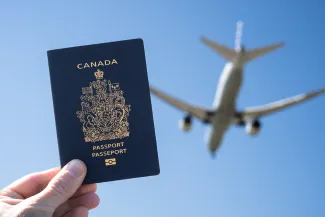
If you’re a Canadian with a serious case of wanderlust gearing up to escape Toronto (or any part of Canada) this holiday season, make sure you triple-check the latest travel advisories before you go. Trust me, whether you’re daydreaming about ordering a beachside beer in Phuket, hiking near a smoldering Colombian volcano crater, or planning a weekend in Beirut, a quick look at the fine print could save you a lot of trouble. Ottawa just updated its travel guidance for Thailand, Colombia, and Lebanon, and it shows how fast things can change for Canadians abroad, local laws can tighten overnight, and regional tensions can flare up without warning.
Canada’s Newest Travel Advisories at a Glance
Thailand: Stricter enforcement of the legal drinking age (20) and heavy fines for alcohol-related social media posts under a new law. (Yes, posting your vacation beer pics could cost you big time.)
Colombia: An orange alert for Puracé Volcano near Popayán – the second-highest warning level, meaning an eruption could be likely within days or weeks. Travelers are urged to stay away from the crater and heed any park closures.
Lebanon: Ongoing regional volatility that could spark sudden flight cancellations or airspace closures with little warning. Canada continues to maintain Level 3 “avoid non-essential travel” for Lebanon overall, with Level 4 “avoid all travel” advisories in effect for areas near the Israeli and Syrian borders.
Now, let’s dive into the details for each of these destinations and what’s changed.
Thailand: New Alcohol Rules (Don’t Get Fined CA$21,700!)
Thailand is one of Southeast Asia’s most popular getaways for Canadians, but its liquor laws are anything but laid-back. The Canadian government’s updated advisory is a clear reminder that the legal drinking age in Thailand is 20 – no exceptions. And here’s the kicker: a recent amendment to Thailand’s Alcohol Control Act means that even posting a photo of your Singha or Chang beer on social media can land you in hot water. It’s actually illegal to “promote” alcohol consumption in Thailand, so those harmless vacation Instagram posts of cocktails on the beach? They could technically violate the law. Digital investigations have led to fines for influencers who promoted alcohol brands, and officials won’t hesitate to scrutinize public posts. In fact, under the new rules, you could be fined or taken to court for any pictures showing people drinking. The penalties aren’t small, either – we’re talking up to 500,000 Thai baht (around CA$21,700) in fines, plus possible prosecution, for breaching these social media restrictions. No one wants to blow their travel budget on a fine that huge, so think twice before hitting “upload” on that cheers-by-the-pool photo.
And that’s not all. The government in Bangkok has also tweaked the daily alcohol sale hours to reduce confusion (and, hopefully, to keep tourists out of trouble). Historically, you couldn’t buy booze in Thailand between 2 p.m. and 5 p.m. – a rule that baffled many foreigners and frustrated restaurateurs. But as of December 3, 2025, Thailand lifted its decades-old afternoon alcohol ban in a six-month pilot program. During this trial period, alcohol sales are allowed from 11 a.m. straight through to midnight, instead of that odd midday pause. This change is meant to make life easier for tourists and businesses alike. (It was originally a rule to stop civil servants from sneaking off for afternoon drinks – a bit of 1970s logic that officials finally decided might be due for an update.)
However, don’t interpret this as a free-for-all to party at any hour. The fine for drinking outside the permitted hours is still steep – violators can face up to a 10,000 baht fine (around CA$435) and even up to six months in jail if convicted. And get this: that applies even if you bought the drink earlier. In other words, you can’t buy a beer at 11:50 p.m. and nurse it until 2 a.m. in a public place unless you’re somewhere with a special license (more on that in a second). Thai authorities are quite serious about these time restrictions, so finishing that last cocktail before the clock strikes midnight is a smart idea.
Where You Can Still Sip After Midnight
So, what if you really want a late-night drink? There are a few exceptions to the rule, and the savvy traveler should know about them:
Licensed hotels: If you’re an in-house guest at a licensed hotel, you’re in luck. Hotels can serve their guests 24/7. So feel free to order that nightcap from room service or the lobby bar at 2 a.m. – it’s allowed for hotel guests on the premises.
International airports: Duty-free shops and airport bars are exempt from the usual hour restrictions. If you’re in transit at Bangkok’s Suvarnabhumi Airport or Phuket International, you can grab a drink at odd hours – airports operate on their own schedule.
Designated “entertainment” zones: Certain districts deemed entertainment or tourist zones have special permits to pour drinks until 4 a.m. These are basically nightlife areas. If you’re in one of these zones (say, parts of Bangkok or Phuket known for clubs), some bars and clubs can legally stay open late. Just make sure the venue is actually in one of these zones and properly licensed.
Even with these exceptions, travelers should keep any receipts as proof that they bought alcohol legally and should know the local rules by district. And please, think twice before live-streaming that 3 a.m. Full Moon Party on social media. The Thai Ministry of Public Health has warned on its website that “violators face prosecution or heavy fines,” a message that the Canadian advisory also highlights. In short, Thailand is still a Land of Smiles, just don’t break their booze rules, and you’ll keep smiling too.
Colombia: Puracé Volcano Rumbles to Orange Alert
Colombia’s Puracé National Natural Park – near the colonial city of Popayán in the Cauca Department – is famous for its steamy volcanic fumaroles, majestic Andean condors, and misty mountain trails. It’s also home to Puracé Volcano, one of the country’s most active peaks. Recently, that volcano has decided to make some noise. **Colombian authorities raised the alert for Puracé to orange, which is the second-highest level on their four-color warning scale. What does “orange alert” mean in plain language? Basically, it signals that an eruption could be likely within days or weeks – it’s a big heads-up to stay vigilant.
In response, Canada’s latest travel notice for Colombia urges people to stay well away from the Puracé crater and respect any park closures. This isn’t the time to be hiking up for a selfie on the rim. If you’re anywhere near the area, pay attention to local news (yes, it’ll be in Spanish – now might be a good time to brush up, or use a translation app) and official bulletins from the Colombian Geological Service (Servicio Geológico Colombiano). The Canadian advisory specifically suggests monitoring those Spanish-language updates, which is a solid idea even if your Spanish is mostly “hola” and “gracias.”
What could happen under an Orange alert? Here are a few possibilities to keep in mind:
Evacuations: If things escalate, authorities might evacuate high-risk communities around the volcano. In other words, locals near Puracé could be asked to leave for safety, and obviously, tourists would need to clear out too.
Park closures: Trails and tourist infrastructure in and around Puracé National Park may be shut down with little notice. The park rangers won’t hesitate to close off areas if the volcano starts acting up. If you had a trek planned, be prepared for cancellations.
Flight disruptions: Popayán’s Guillermo León Valencia Airport is the nearest airport, and it could see flight delays or cancellations if ash or seismic activity becomes a problem. Even if you’re not flying into Popayán, ash clouds can sometimes affect air travel more broadly. So keep an eye on flight alerts if you’re in Colombia, especially in the southwest region.
For now, major Colombian cities like Bogotá, Medellín, and Cartagena are unaffected by Puracé’s rumblings, so trips to those places aren’t impacted by this volcano. But the federal Canadian government still advises travelers to “exercise a high degree of caution” throughout Colombia and to “avoid all travel” to certain areas, especially remote border regions that might be controlled by armed rebel groups. Those warnings were in place even before the volcano news, and they remain unchanged. In short, keep your adventures to the well-trodden paths, listen to local authorities, and maybe save that volcano hike for another time.
Lebanon: Security Situation Remains Fluid and Unpredictable
Lebanon is a country that captivates visitors with its Mediterranean cuisine, mountain vineyards, and buzzing Beirut nightlife. Just last summer, it saw a notable tourism rebound – Beirut’s hotels were 80–90% full, and July arrivals at the airport jumped by over 16% compared to the previous year. I was there myself (in spirit, at least, scrolling through friends’ travel photos), and it seemed like everyone was rediscovering the country’s charms, from the beaches to the rooftop bars.
But despite the influx of tourists, geopolitical tensions in the region have kept Canada’s official travel guidance on the cautious side. The advisory for Lebanon is still at Level 3: “Avoid non-essential travel” for the country as a whole, and even Level 4: “Avoid all travel” for certain areas, like the southern regions near the Israeli border and parts of the northeast near Syria. These warnings reflect the reality that things can change quickly. Unfortunately, the Middle East remains volatile – and Lebanon, given its location, can feel the effects of conflicts next door.
The newest Canadian bulletin stresses that the security situation in Lebanon could escalate with little warning. In practice, this means you need to have a plan B (and maybe C). For example, if regional tensions spike, commercial airlines might suspend flights or abruptly reroute to avoid Lebanese airspace. We’ve seen this scenario before during flare-ups – one day, flights are normal; the next day, airlines are scrambling to adjust routes. Global Affairs Canada has basically said that travelers should be ready to leave quickly if things deteriorate and flights become scarce. In a prepared statement (yes, the kind they actually put out in press releases), they suggested having a go-bag and an exit strategy: if you’re in Lebanon and there are signs of trouble, don’t wait until the last minute to find a way out. Also, register with the government’s Emergency Registration of Canadians Abroad service so officials know you’re there and can reach you. It’s free and easy to sign up online, and you’ll be notified if the situation changes or evacuation flights are arranged.
To put it in everyday terms: Lebanon’s travel charm is still there – the hummus in historic Gemmayzeh is just as delicious, and the nightlife in Mar Mikhael is as electric as ever – but you have to stay aware. Buffer some extra days into your itinerary in case flights get shuffled. Keep your phone on and check travel updates. And if your gut (or the news) tells you things are heating up politically, be ready to cut the trip short. Better a changed plan than being stuck in a tough spot.
Why These Updates Matter Now
You might be wondering, why the flurry of updates right before the holidays? Well, December has been a busy time for travel advisories. This comes on the heels of Ottawa rolling out a revamped weather-alert system for travelers and issuing heightened warnings about terrorism risks in some popular European capitals ahead of the bustling holiday markets. In other words, the government is trying to get ahead of potential problems during one of the busiest travel seasons of the year. These latest changes – whether it’s Thailand’s new drinking law, Colombia’s volcanic rumblings, or Lebanon’s delicate security situation – all highlight how a destination’s vibe can flip practically overnight. One day you’re looking at dreamy beach photos, the next day you read that new laws or natural events might throw a wrench in those plans. It’s a reality of modern travel: a place’s allure (be it Thailand’s beaches, Colombia’s cloud forests, or Lebanon’s historic sites) can be clouded by new rules, plate tectonics, or politics at any time. Staying updated isn’t about being paranoid – it’s about being prepared and informed.
FAQ
Q: Do Thai authorities really check social media for alcohol photos?
A: It might sound crazy, but yes, they do monitor and enforce this. In recent cases, digital sleuths in Thailand have traced social media posts and issued fines – particularly when influencers or businesses post content that could be seen as advertising alcohol. Even if you’re just a tourist posting a selfie with a beer, if that post becomes public and catches the wrong person’s attention, you could face penalties. The safest bet is to enjoy your drinks offline and save the cheers shots for when you’re back home.
Q: Is Puracé Volcano’s park completely closed to visitors now?
A: The park authorities can close off trails and areas around Puracé at a moment’s notice when the alert level is high. Currently, with an orange alert in effect, they have likely shut down access to the immediate vicinity of the volcano. It doesn’t necessarily mean the entire Puracé National Natural Park is off-limits – but any trails near the volcano or viewpoints overlooking it are probably closed for safety. If you’re in that region, check the latest updates each morning (the Colombian Geological Service usually provides daily status reports). And definitely do not attempt to go near the crater, even if you hear about locals doing it. It’s not worth the risk.
Q: I have a layover in Beirut – is it safe to transit through Lebanon right now?
A: As of the latest info, Beirut’s Rafic Hariri International Airport is operating normally, and flights are running on schedule. Transiting through the airport (without entering the city) is generally fine at the moment. However, Canada’s advisory warns that if regional tensions escalate, Lebanon’s airspace could be closed in a hurry, which would obviously disrupt flights. If you’re planning a trip that routes through Beirut, have a backup plan just in case – for example, know the alternate routes through Amman, Doha, Istanbul, or other major hubs. And keep an eye on the news leading up to your flight. If there are signs of trouble, you might want to reroute before you even depart.
Q: How quickly do Canadian travel advisories change?
A: They can update very quickly – in fast-moving situations, updates have been issued within hours or day-to-day. For example, during sudden political events or natural disasters, Global Affairs Canada will modify the advisories as soon as new information or guidance is available. It’s not uncommon to see multiple updates in a single week for a country in turmoil. That’s why I strongly recommend subscribing to the “Travel Advice and Advisories” notifications for any destination you’re visiting. You’ll get an email (or push notification, if you use their app or website alerts) whenever there’s a change, almost in real time. It’s the best way to stay informed of new warnings, lifted restrictions, or any changes that could affect your travel plans.
Bottom Line for Canadian Jet-Setters
No matter if your December escape involves sipping a cold Chang beer at a Thai night market, trekking through Colombia’s Valley of Waterfalls, or savoring a plate of hummus in Beirut’s historic Gemmayzeh district, make sure you double-check the latest travel advisories before you go. A few taps on your phone today could save you CA$21,700 in fines, an unexpected airport camp-out, or a frantic detour home later. In other words, stay informed, respect local rules, and travel smart; that way, you can enjoy your adventure with peace of mind. Safe travels!
About the Author

Bob Vidra
Bob Vidra, based in scenic Tahoe, is an esteemed tech editor known for his deep understanding of the dynamic intersection of technology, travel, and the outdoors.