
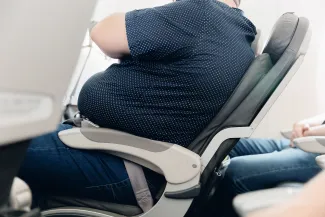
Two very different countdown clocks just started ticking for U.S. flyers. One involves the width of an airline armrest, the other the hologram on a driver’s license. Between them sits a limited-time flurry of bargain airfare meant to spur bookings before the new rules land.
Southwest tightens the armrest rule
Southwest Airlines said its long-standing “Customer of Size” policy will shift on January 26. Anyone who extends beyond the armrest must now purchase a second seat when they first buy their ticket. The carrier will still refund the extra fare, but only if the traveler files a request within 90 days and only if space existed on the flight, according to the airline’s updated guidance. For years, Southwest handled the issue at the gate: agents issued no-cost extra boarding passes when seats were open, and travelers frequently boarded early to claim adjacent space. That flexibility disappears under the new policy. Southwest also reiterated that gate agents can require an on-the-spot purchase if a customer shows up with only one seat but clearly needs two.
Refunds move from “automatic” to “maybe”
The biggest change is risk transfer. Previously, plus-size travelers paid for a second seat only after agents confirmed it would be refunded. Now passengers must pay up front with no guarantee of reimbursement if the flight is full. For leisure flyers, the potential cash tie-up is an annoyance; for road-warrior travelers buying last-minute fares, it could mean hundreds of extra dollars locked away for months. Southwest maintains that the rule is about safety—one seatbelt per passenger, one evacuation path per row—but the timing also dovetails with the carrier’s decision to abandon its famous open-seating system in 2026. On January 27, 2026, Southwest will assign seats like most carriers. Ensuring every customer knows exactly how many seats they occupy now will make that transition cleaner—and, critics note, could boost ancillary revenue as the policy ramps up.
REAL ID procrastinators face a new $45 fee
A second deadline looms beyond the boarding door. Starting May 7, 2025, all adults on domestic flights must present a REAL ID–compliant driver’s license, passport or other accepted identification. This mandate is old news, but the Transportation Security Administration just added financial teeth: beginning February 1, 2026, travelers who still arrive without compliant ID can pay $45 for TSA Confirm.ID, a one-time, 10-day identity-verification pass. The agency framed Confirm.ID as a security upgrade—“verifying identities and keeping threats off domestic transportation networks,” TSA said—but it is also designed to keep airport lines moving. More than 94 percent of current passengers already show REAL ID or passports at checkpoints, according to TSA data, leaving a stubborn single-digit minority that could snarl queues after the hard deadline hits. For New Jersey, where DMVs report lingering backlogs, the warning is explicit: book an appointment or budget an extra $45 each way after 2026.
Cyber Monday deals try to soften the blow
If the policy news feels pricey, airlines are dangling discounted carrots this week.
Southwest: up to 50 percent off (but mind the fine print)
Through 11:59 p.m. Pacific time on December 4, Southwest is knocking up to 50 percent off base fares with promo code 50CYBER. The sale covers continental U.S. flights between January 6 and March 4—except Sundays, plus blackout days February 12, 13 and 16. Taxes, fees and the newly required second seat for plus-size travelers still apply. Rapid Rewards members can score bonus points on redemptions, and Southwest Vacations packages include extra statement credits.
Breeze and Frontier pile on
• Breeze Airways: 60 percent off most base fares booked by December 2 for travel December 10, 2025, through February 10, 2026, using code CYBER. • Frontier Airlines: advertising up to 100 percent off base fare on select routes—remember, Frontier’s fees for carry-ons, seat selection and even customer-service calls can overshadow that headline number.
Industry lens: revenue, regulation and reputation
For carriers, the seat-size policy and REAL ID fee highlight two enduring realities: 1. Ancillary revenue matters. Extra-seat purchases, change fees and branded ID services generate revenue insulated from fuel swings and fare wars. Southwest long avoided many nickel-and-dime tactics, but tighter seat rules align it more closely with peers who monetize every square inch of cabin real estate. 2. Regulatory certainty shapes product design. Airlines must plan years ahead for security rule changes; TSA’s Confirm.ID option buys them breathing room at checkpoints once the REAL ID deadline hits, preventing bottlenecks that could cascade into departure-bank delays.
What travelers should do now
• Measure before you book. Southwest’s standard economy seat width is published on its site; if the armrest boundary looks tight, budget for a second seat from the start. File that refund request the minute your return leg lands. • Lock in REAL ID early. DMV appointment calendars already stretch months into the future in some states. A passport works too, but remember passport agencies face seasonal backlogs of their own. • Stack sales with schedule flexibility. Cyber Monday fares can be stellar if your dates align, but sale inventory is thin on Fridays, Sundays and holiday eves. Use a card that offers refundable travel credit or trip-delay insurance to cushion any date changes. • Compare total trip cost, not just fare. A “100 percent off” Frontier ticket loses its shine once add-on fees hit; conversely, Southwest’s checked-bag allowance can neutralize its headline price premium, even after seat-policy tweaks.
The bottom line
Airlines are trimming seat wiggle room while the government tightens ID rules, yet both parties sprinkle limited-time discounts to keep planes full this winter. Book smart, measure twice, and remember: the cheapest way to avoid the $45 Confirm.ID fee is still a quick stop at the DMV—hardly glamorous, but far cheaper than a surprise surcharge at security. Because in travel, as in life, the early bird may get the window seat, but the prepared bird keeps the extra cash for an in-flight beverage.
About the Author

Jennifer Wilmington
Jennifer Wilmington is a distinctive voice in the world of family and luxury travel, offering unique perspectives derived from her diverse background and experiences.