
Travelers often think of America as “new,” but scattered across the country are landmarks older than the nation itself. These sites – built long before modern tourism – have beckoned visitors for generations. Here we explore five of the oldest man-made attractions in the United States, each steeped in history and open today for travelers to experience. From ancient adobe pueblos to colonial forts, these attractions were constructed centuries ago for very different purposes, yet all have evolved into celebrated cultural landmarks.
Taos Pueblo, New Mexico

Taos Pueblo is an ancient adobe village in northern New Mexico dating back to the late 13th or early 14th century. Built by the Tiwa-speaking Puebloan people, it is a living community of multi-storied homes and ceremonial kivas that has been continuously inhabited for over 1,000 years. The thick-walled adobe structures – some rising five stories high – exemplify a remarkable continuity of indigenous architecture and life. In 1992 Taos Pueblo was designated a UNESCO World Heritage Site, recognized alongside its 1960 listing as a National Historic Landmark.
Originally constructed as a fortified village along a small Rio Grande tributary, Taos Pueblo long served as a center of trade between Pueblo peoples and Plains tribes. Today the pueblo remains home to about 150 residents who maintain traditional ways. Over the past century, Taos Pueblo also became a magnet for tourists and scholars intrigued by its age and authenticity. The community now welcomes the public through guided tours that share the pueblo’s history and living culture. Visitors can wander the dusty plazas between sun-dried mud-brick buildings, browse crafts like pottery and jewelry sold by tribal members, and even witness traditional dances on feast days.
San Miguel Chapel, New Mexico
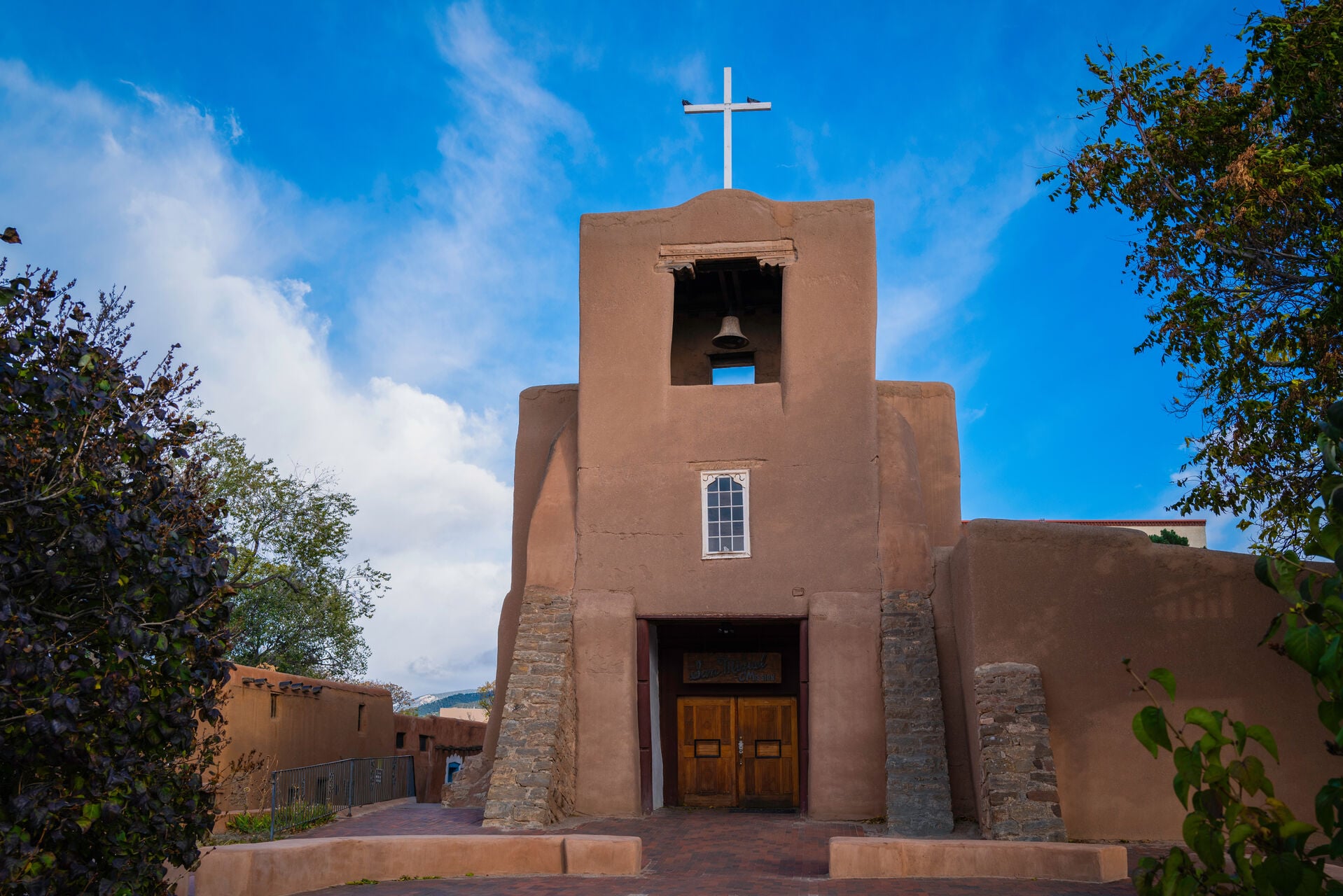
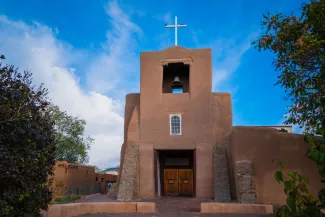
In the heart of Santa Fe stands San Miguel Chapel, often called “the Oldest Church in the USA.” This small adobe church was built between 1610 and 1626, just two years after Santa Fe’s founding, making it over four centuries old. Spanish Franciscan friars and Tlaxcalan (Mexican Indian) laborers constructed the chapel to serve a barrio of soldiers and indigenous servants in the new Spanish colonial capital. The thick adobe walls have survived fire, war, and weather. Although the chapel was damaged during the Pueblo Revolt of 1680 and partially rebuilt in 1710, the core adobe nave and bell tower are largely original.
Over the centuries, San Miguel Chapel transitioned from a humble parish outpost to a prized historic site. By the 1870s it was known locally as the “Oldest Church” and efforts began to preserve it. Today the chapel functions as both an active sacred space and a tourist attraction. Docents lead visitors through the one-room sanctuary, where you can see the original altar floor and a rare 1798 painted wooden altar screen above the altar. The chapel’s 780-pound bronze bell, cast in Mexico in 1856, and hand-carved ceiling vigas are on display as well.
Historic Jamestowne, Virginia

On the James River in Virginia lie the ruins of Jamestown, the first permanent English settlement in North America. Jamestown was established in 1607 as the capital of England’s Virginia Colony. While the original triangular wooden fort and village have largely vanished, one iconic structure endures: the red-brick Jamestown Church tower, dating to 1639. This church tower is the oldest English-built building fragment standing in the United States.
Interest in Jamestown as a historic site emerged in the 1800s. Ahead of Jamestown’s 300th anniversary in 1907, restoration work rebuilt the church’s nave and added a seawall to halt riverbank erosion. Today, Historic Jamestowne is a popular tourist destination where visitors can walk the site of the old fort, view thousands of unearthed artifacts, and explore the original 17th-century church tower preserved as part of the archaeological park.
Fairbanks House, Massachusetts
The Fairbanks House in Dedham, Massachusetts, holds the title of the oldest surviving wooden house in North America. Built between 1637 and 1641, this rustic farmhouse was the home of English settler Jonathan Fairbanks and his family. The house began as a simple hall-and-parlor dwelling made of oak timbers and hand-sawn planks. For eight generations and nearly 270 years, Fairbanks descendants continuously lived in this house, marking it with layers of history.
By the late 1800s, the Fairbanks House had already become an object of fascination for travelers interested in colonial-era relics. In 1905 it opened to the public as a house museum, one of the earliest such museums in the United States. Visitors can tour the interior and view artifacts that offer a glimpse into early colonial life.
Castillo de San Marcos, Florida
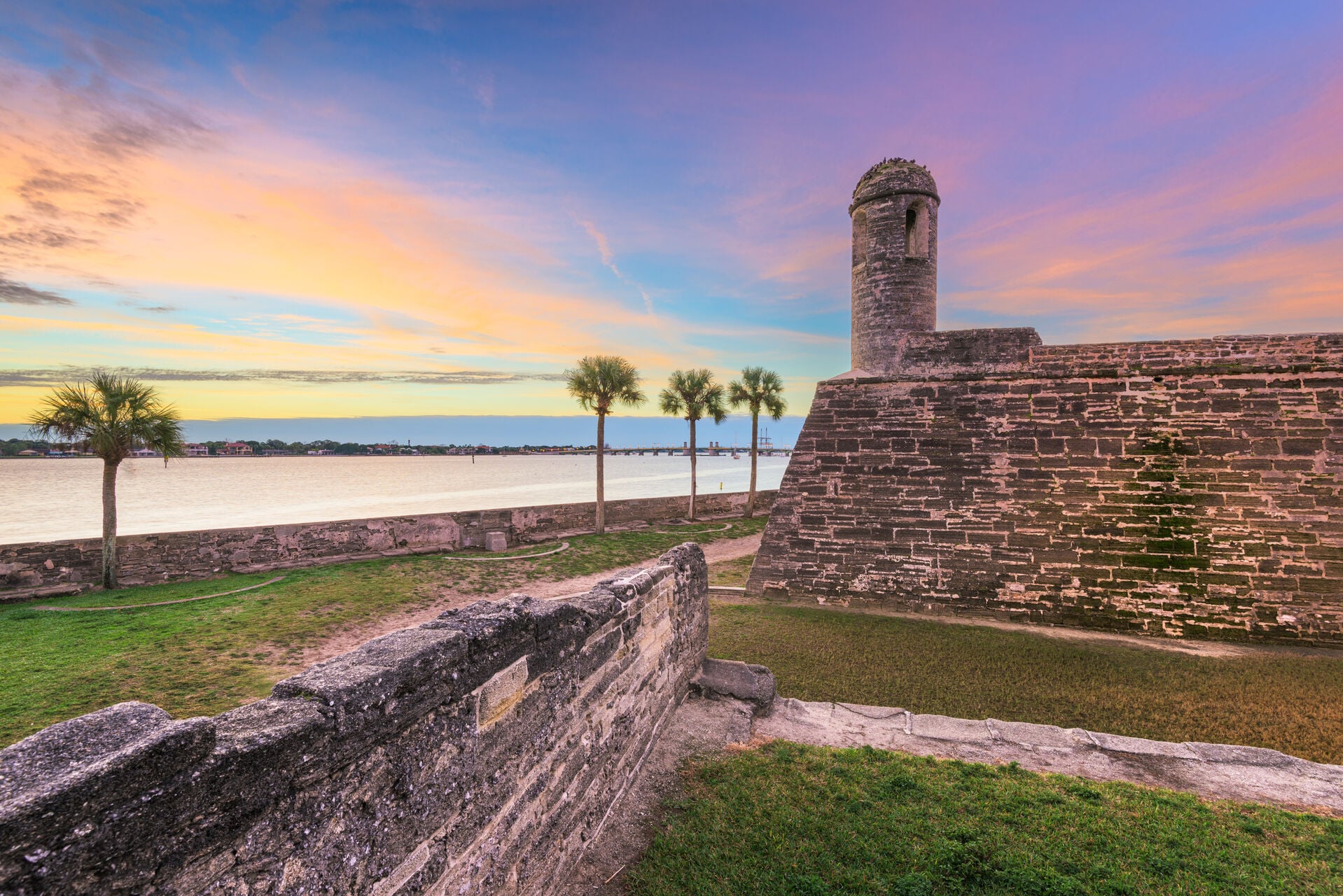
Overlooking Matanzas Bay in St. Augustine stands the formidable Castillo de San Marcos, the oldest masonry fort in the continental United States. Built by the Spanish between 1672 and 1695, the Castillo protected St. Augustine from pirates and foreign enemies. The fort was constructed from coquina, a local shell-limestone that proved durable against cannon fire.
By the 1800s, the fort itself became a curiosity. Today, Castillo de San Marcos is a National Monument, offering visitors self-guided exploration, ranger-led tours, and historic weapons demonstrations. Its blend of military engineering and romantic antiquity makes it a popular attraction, providing insight into the dawn of European America.
The Oldest Man-Made U.S. Attractions:
| Name | Location | Year Built/Established | Original Purpose | Today’s Role for Tourists |
|---|---|---|---|---|
| Taos Pueblo | Taos, New Mexico | Late 1200s | Pueblo village | Living indigenous community offering tours and cultural demonstrations. |
| San Miguel Chapel | Santa Fe, New Mexico | 1610–1626 | Catholic mission church | Historic church museum and tourist attraction. |
| Historic Jamestowne | Jamestown, Virginia | 1607 (settlement); 1639 (church tower) | Colonial capital and fort | Archaeological park with ruins and museum. |
| Fairbanks House | Dedham, Massachusetts | 1637–1641 | Family farmhouse | House museum showcasing colonial life. |
| Castillo de San Marcos | St. Augustine, Florida | 1672–1695 | Spanish fortress | National Monument with tours and reenactments. |
About the Author

Bob Vidra
Bob Vidra, based in scenic Tahoe, is an esteemed tech editor known for his deep understanding of the dynamic intersection of technology, travel, and the outdoors.