
Día de los Muertos isn’t Halloween—it’s a luminous act of remembrance. Across Mexico and parts of Central America, families build altars to honor loved ones, lace streets with cempasúchil (marigolds), bake Pan de Muerto, and gather at cemeteries where memory feels tangible. Travelers are welcome, but the best experiences happen when you slow down and engage with care: learn the symbolism of each ofrenda element, taste the regional dishes, and give the moment the stillness it deserves. This guide spotlights stays that make meaningful access effortless—from Riviera Maya sanctuaries staging altar workshops and storytelling dinners, to design-forward resorts inspired by Huichol (Wixárika) artistry, to Antigua’s All Saints’ traditions and the highlands’ breathtaking Giant Kite Festival. Whether you want to photograph towering Catrinas on the Malecón, join a shaman-led cacao ceremony at sunset, or even release sea-turtle hatchlings as a quiet counterpoint to the festivities, these properties pair cultural depth with polished hospitality. Plan for October 31 through November 2 to catch the full arc—processions, parades, and late-night vigils—and pack curiosity, comfortable shoes, and respectful intent. The result isn’t just a great trip; it’s a gentle reorientation toward what endures.
Sandos Caracol Eco Resort — Playa del Carmen, Mexico
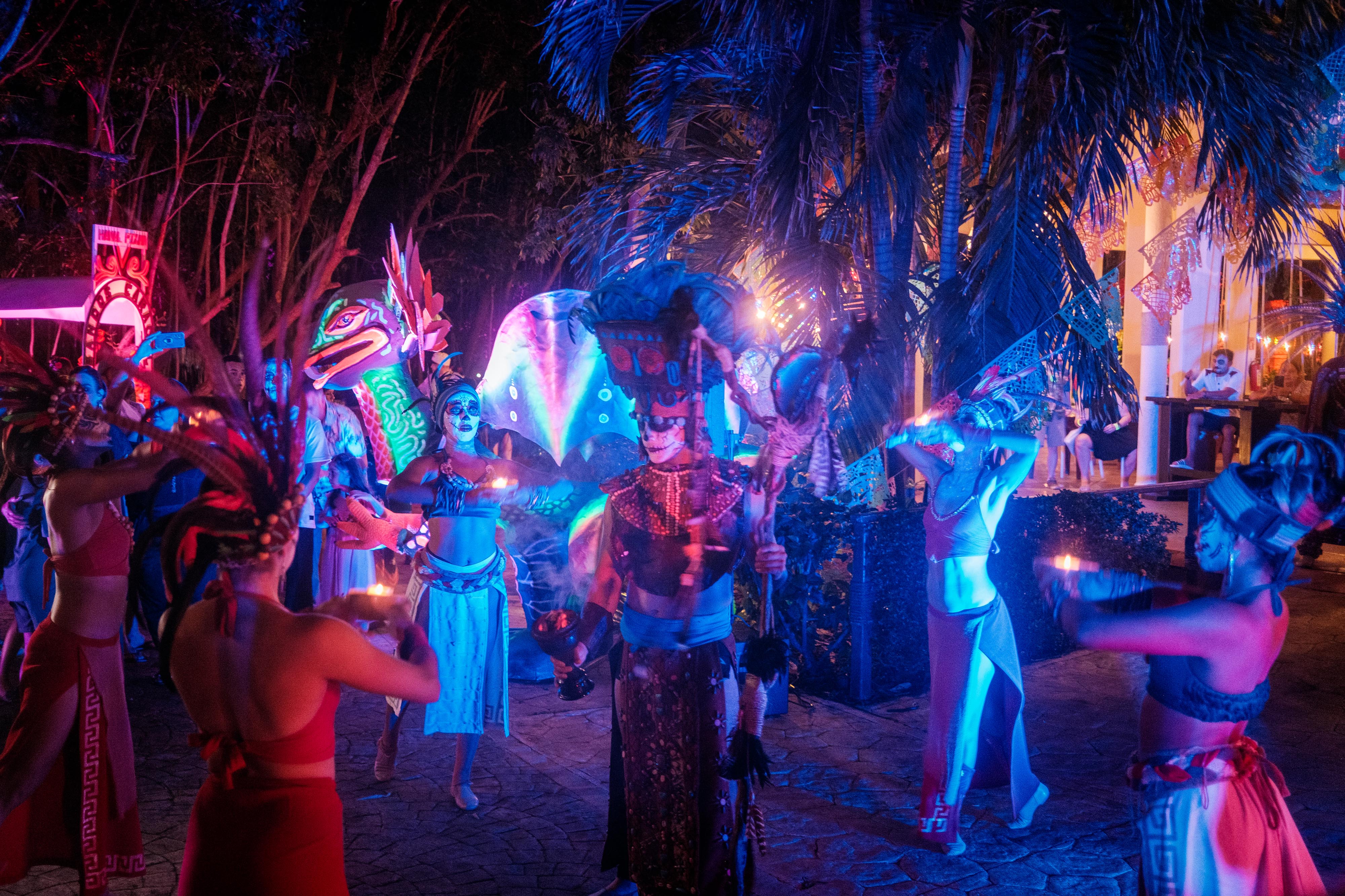
Día de los Muertos takes over this jungle-set, eco-minded all-inclusive with altars, Catrina parades, and live performances that feel straight out of a storybook. Expect ceremonial tributes, street-food pop-ups, face painting, and festival games—no transfer off-property required.
Tip: Book a late-afternoon arrival to catch golden hour as the altars light up.
Villa Bokéh — Antigua, Guatemala
Base yourself at this artful hideaway to experience Antigua’s soulful All Saints’ Day traditions: marigold-lined graves, candlelit cemeteries, and, in nearby Sumpango and San Pedro Sacatepéquez, the Giant Kite Festival—massive hand-painted barriletes sent skyward as messages to the spirits. Villa Bokéh’s concierge team lines up private guides, translators, and in-house drivers so you can focus on the magic.
Tip: Time your visit for the kite launches; arrive early to photograph the artwork before the crowds.
Marriott Puerto Vallarta Resort & Spa — Puerto Vallarta, Mexico
On Nov 1–2, Puerto Vallarta’s Malecón becomes a living gallery of towering Catrinas and elaborate altares, with the “Death Is Alive” parade weaving through the cobblestones. Prefer to keep it close to the bay? The resort’s Celebration Beyond Life dinner brings music, storytelling, and traditional flavors on-site—face painting included. Bonus: November overlaps with turtle-release season, and guests can help return Ridley hatchlings to the sea.
Tip: Book the package with dinner tickets and breakfast for two; schedule turtle release for sunrise.
W Punta de Mita — Nayarit, Mexico
This design-forward escape channels Huichol (Wixárika) symbolism—think altar-inspired lighting and ceremony-centric programming. Mark the holiday with a shaman-led cacao ritual on the beach, then lean into modern Mexico at Rubra by award-winning Chef Daniela Soto-Innes. On Nov 1, Echoes of the Unknown pairs a four-course menu with live performance and myth-driven storytelling.
Tip: Reserve front-row lounge seating for the cacao ceremony; it’s the most transportive hour you’ll spend all season.
JW Marriott Cancun Resort & Spa — Cancún, Mexico
Hands-on and high-touch: browse traditional altars, learn their symbolism, then craft your own. Add a Pan de Muerto baking class and Candy Calaverita workshop, or opt for a promotion that bundles the class with your stay. Between events, retreat to ocean-facing rooms, a Mayan-inspired spa, private cabanas, and the legendary margarita list at the JW Lobby Bar.
Tip: Book a late-day spa slot; step straight from treatment to sunset on the sand.
How to Do It Right
Arrive early, stay late: Plan at least Oct 31–Nov 2 to catch build-outs, ceremonies, and parades.
Dress the part (respectfully): Black + marigold accents photograph beautifully; be mindful around cemeteries and family altars.
Go hands-on: Classes, guided visits, and hotel-led ceremonies add context you won’t get from a quick stroll.
In the end, Día de los Muertos is less a spectacle than a conversation—between past and present, place and traveler. The properties here make it easy to step in with care: learn the language of ofrendas, taste the stories baked into Pan de Muerto, and let a parade or kite-filled sky rearrange your sense of time. Build your plans around November 1–2, arrive a day early to settle in, and say yes to the hands-on moments—altar workshops, guided cemetery visits, cacao ceremonies—that add context to the color. Photograph generously, participate respectfully, tip well, and remember that you’re a guest at a living tradition. If you do, you’ll leave with more than great images; you’ll carry a quieter kind of souvenir—one that keeps glowing long after the candles are out.